
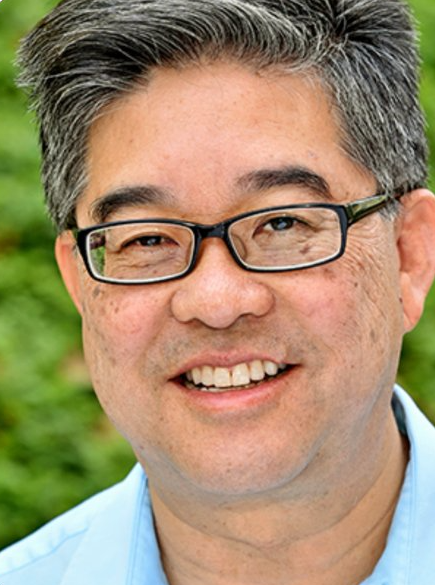
Daniel M. Mayeda is the Associate Director of the Documentary Film Legal Clinic at UCLA School of Law. Prior to this appointment, Dan practiced law for nearly 35 years, specializing in litigation involving the media and entertainment industries. He was a shareholder in the Los Angeles law firm of Leopold, Petrich and Smith, and is now an attorney with Ballard Spahr.
In 2021 Dan was elected Co-Chair of the Los Angeles County Citizens Redistricting Commission, which is tasked with using 2020 Census data to draw new boundaries for the five supervisorial districts for the Los Angeles County Board of Supervisors. Aside from big city mayors, each Supervisor is the most powerful local elected official in the United States in terms of population represented (about two million each), resources controlled, and in some cases geographic territory covered. This will be the first time that a fully independent Commission will be undertaking the decennial redistricting process for Los Angeles County.
Dan has been a longtime advocate for accurate and sensitive depictions of Asian Americans in the media. He is a member of the Board of Directors of East West Players, the country’s premiere Asian Pacific American theatre organization. Since 2000 Dan has helped lead a national multi-ethnic coalition of civil rights and media activism groups to advocate for greater diversity, equity and inclusion in Hollywood and in the media. He was Chair of the Asian Pacific American Media Coalition, and served on the national Diversity Advisory Council for Comcast Corporation.
Dan has written and spoken extensively on media, intellectual property and Asian American community issues. He has been an Adjunct Professor at USC’s Annenberg School for Communication and Journalism, and has taught media courses at California State University, Los Angeles and California State University, Northridge.